
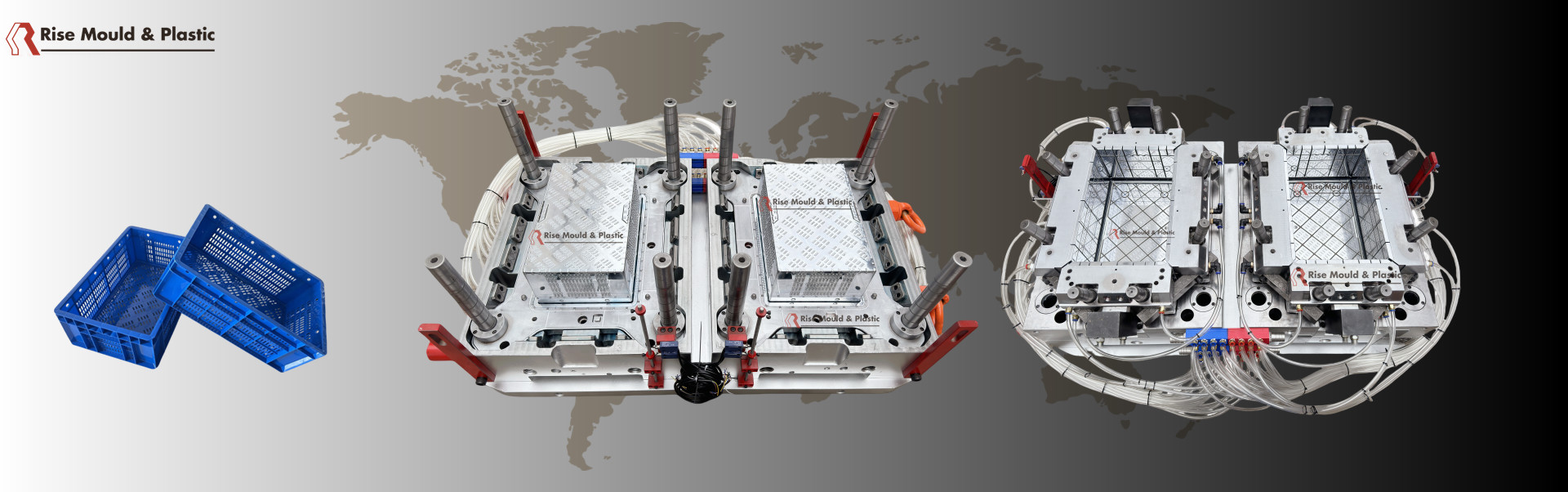
The Advantages of Using BECU in Crate Mould
1. Superior Thermal Conductivity
The most important reason BeCu is used in crate moulds is its exceptional thermal conductivity:
- Thermal Conductivity: BeCu (C17200) has a thermal conductivity of approximately 105–130 W/m·K, compared to 25–30 W/m·K for standard P20 or H13 tool steel.
- Result: BeCu inserts can remove heat 3–5 times faster than steel, reducing cooling time by 30–50% in critical areas.
- Impact: For a typical crate mould, a 40% reduction in cooling time can shorten overall cycle time from 90 seconds to 60 seconds — a 33% productivity gain.
Faster cooling not only improves output but also reduces part warpage and shrinkage variation, especially in large, flat crate surfaces.
2. Thermal Conductivity Comparison — BECU vs Tool Steel
| Property | BeCu (C17200) | P20 Tool Steel | H13 Tool Steel | Benefit for Crate Mould |
|---|---|---|---|---|
| Thermal Conductivity (W/m·K) | 105–130 | 29 | 25 | 4× faster heat removal |
| Hardness (HRC) | 38–44 | 30–34 | 46–52 | Good wear resistance |
| Tensile Strength (MPa) | 1,200–1,400 | 900–1,100 | 1,400–1,600 | Adequate for core inserts |
| Wear Resistance | Good | Good | Excellent | Combined with steel in critical wear areas |
| Corrosion Resistance | Excellent | Moderate | Moderate | Lasts longer in humid environments |
3. Reduced Part Warpage
Crate moulds typically feature large planar surfaces, deep ribs, and thin walls — geometries that are prone to uneven cooling and warpage. BeCu addresses this in two key ways:
- Uniform Temperature Distribution: BeCu spreads heat rapidly across the insert surface, eliminating hot spots that cause localized shrinkage.
- Reduced Differential Shrinkage: More uniform cooling means all sides of the crate cool at a similar rate, resulting in flatter surfaces and truer dimensions.
This is particularly valuable for heavy-duty and export crates that must meet strict dimensional tolerances for automated handling systems.
4. Ideal for Core & Slider Applications
BeCu is most commonly used in specific mould components rather than the entire mould base:
- Core Inserts: Deep core sections that are difficult to cool with standard water lines. A BeCu core can be cooled efficiently through conduction even without direct water contact.
- Slider Bodies: Moving sliders for side-action features (such as hand-grip openings or identification windows on crates) benefit from BeCu's combination of strength and thermal performance.
- Baffle Cores / Heat Pipes: Thin, tall cores are often made from BeCu to act as thermal conductors, drawing heat away from the cavity surface to a cooled steel base.
6. When to Use BECU in a Crate Mould
| Scenario | Recommended Action |
|---|---|
| High-volume crate production (> 200,000 pieces/year) | Use BeCu cores to reduce cycle time and maximize output |
| Thin-wall crates (< 2.5 mm wall thickness) | BeCu for core inserts to prevent warpage |
| Narrow lip areas of crate containers | Standard tool steel cannot accommodate cooling channels in these tight spaces. BECU inserts provide high thermal conductivity to accelerate heat dissipation and reduce cycle time. |
| Deep-rib crate designs | BeCu core pins or baffle inserts for effective heat extraction |
| Budget-constrained projects | Limit BeCu to the hottest zones; use steel for the rest |
7. Cost-Effective in High-Volume Production
BeCu is more expensive than standard tool steel — typically 3–5× the cost of P20 steel per kilogram. However, the return on investment is clear:
- Cycle time reduction: 15–35% faster cycles directly increase annual output.
- Energy savings: Faster cooling reduces machine runtime and energy consumption per part.
- Scrap reduction: Fewer warped or rejected crates.
- Mould lifespan: BeCu's corrosion resistance helps extend mould life in aggressive production environments.
For medium to high-volume crate mould projects, the additional cost of BeCu is typically recovered within 3–6 months through productivity gains alone.
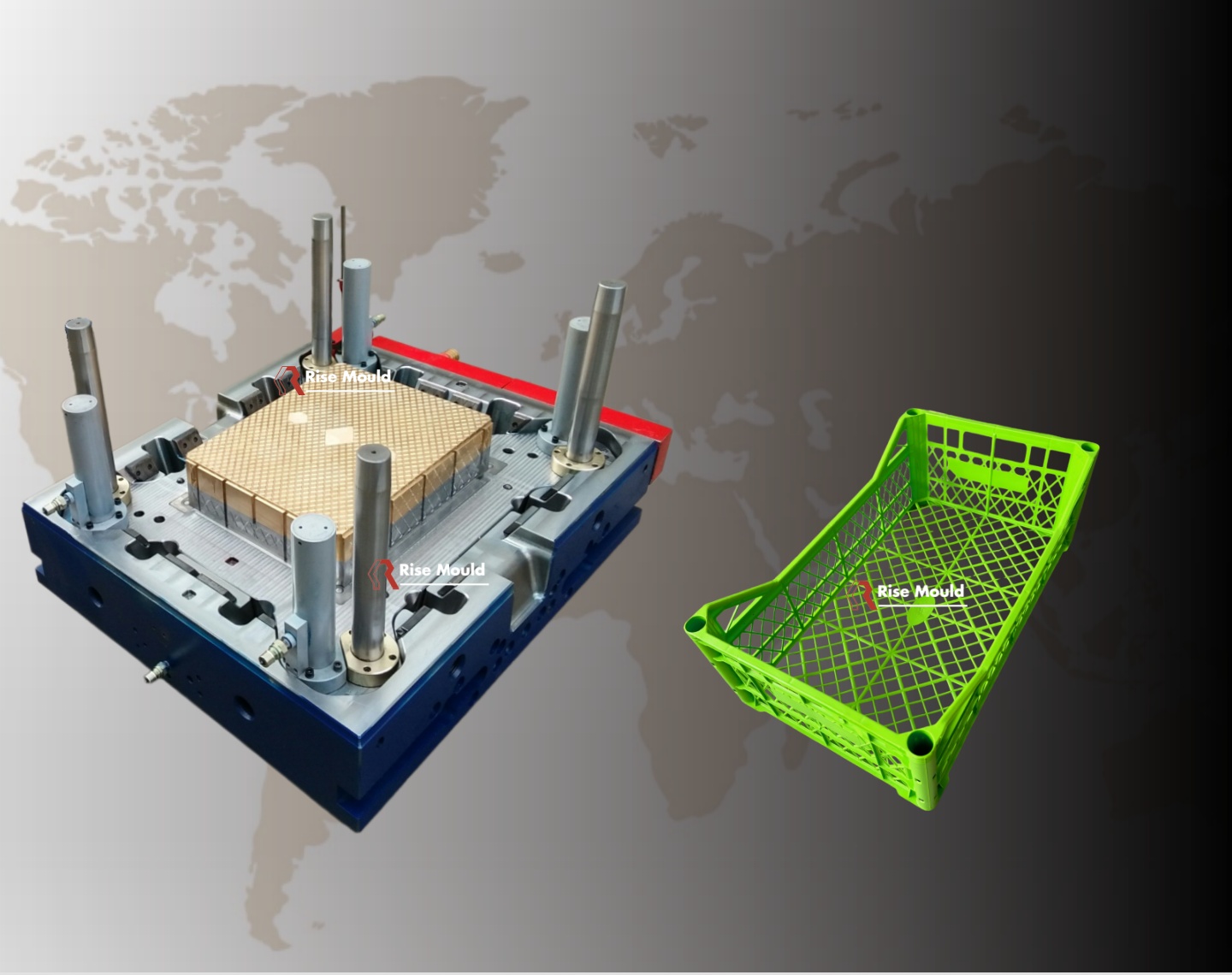
Need a Crate Mould with BeCu Core Inserts?
RISE Mould has extensive experience designing and manufacturing crate moulds with optimized BeCu cooling inserts. Contact our team to discuss your crate mould project and find out how BeCu can improve your production efficiency.

|

|

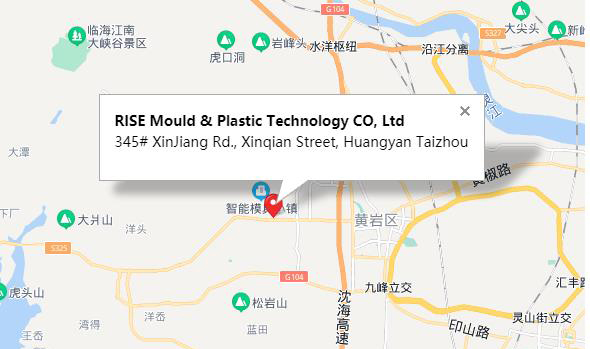
Rise Mould & Plastic Technology CO, Ltd 
345# XinJiang Rd., Xinqian Street, Huangyan Taizhou
export@risemould.com office@risemould.com |
|