
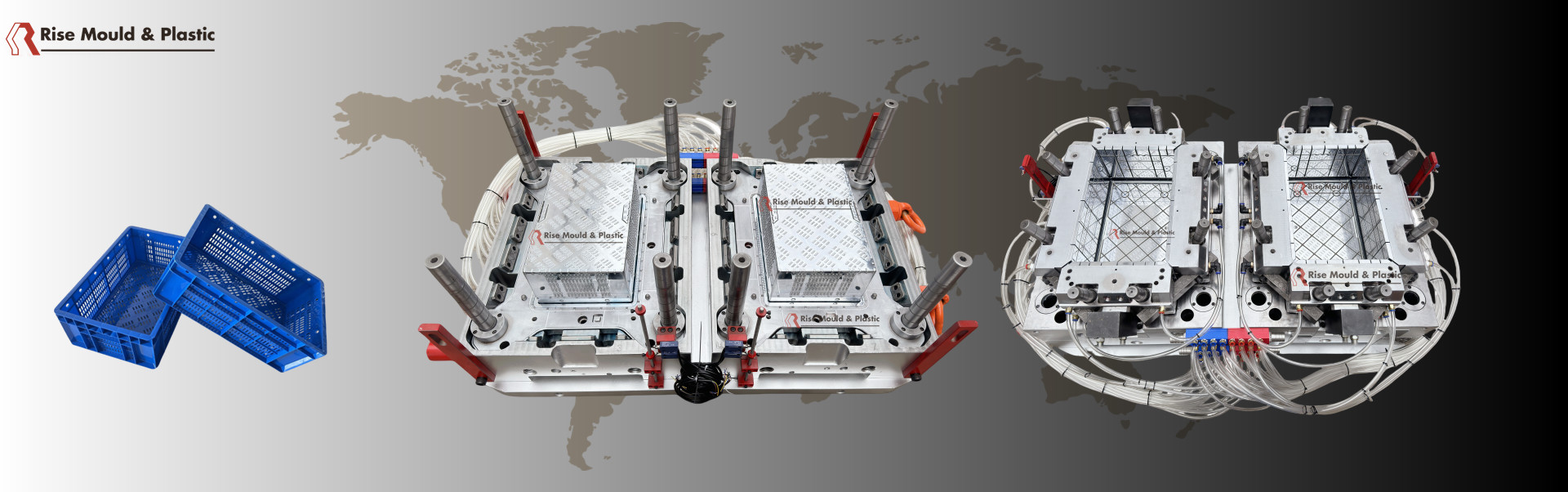
Crate Mould DFM Report: What It Is and Why You Need One
Design for Manufacturability (DFM) is the most critical step in crate mould development. Learn what a professional DFM report includes and how it saves you time and money.
What Is a Crate Mould DFM Report?
A Crate Mould DFM Report (Design for Manufacturability) is a comprehensive engineering analysis document that evaluates your crate mould design before any steel is cut. It identifies potential manufacturing issues, optimises part geometry, and ensures the mould can be produced efficiently and reliably.
For plastic crate mould projects — whether you need a vegetable crate mould 500×320×180mm or a foldable logistics crate mould — the DFM report is the single most important deliverable from your mould manufacturer. It transforms a customer's 2D drawing or 3D model into a production-ready mould design with measurable improvements.
Why a Crate Mould DFM Report Matters
1. Prevent Costly Design Errors
A crate mould without a proper DFM study can lead to expensive rework and delays.
| Issue | Cost Impact | DFM Detection |
|---|---|---|
| Uneven wall thickness | Warpage, rejected parts | Moldflow analysis |
| Incorrect gate location | Short shots, weld lines | Gate simulation |
| Insufficient cooling lines | 40% longer cycle time | Thermal analysis |
| Poor ejection design | Scratched/stuck parts | Draft angle check |
Design changes in DFM stage cost 1/100th of changes after tooling begins.
2. Reduce Injection Molding Defects
Moldflow simulation predicts and prevents common defects before steel is cut.
| Defect | Cause | DFM Solution |
|---|---|---|
| Weld lines | Material flow meeting at low temperature | Reposition gate, increase melt temp |
| Air traps | Air unable to escape cavity | Add venting, adjust fill pattern |
| Warpage | Uneven cooling or residual stress | Optimise cooling layout, balance wall thickness |
| Sink marks | Thick sections shrinking unevenly | Reduce rib-to-wall ratio to 0.5:1 |
| Short shots | Incomplete cavity filling | Increase gate size, optimise runner balance |
3. Lower Mass Production Costs
What Does a Professional Crate Mould DFM Report Include?
Part Design Analysis
| DFM Element | What We Check | Recommendation |
|---|---|---|
| Wall thickness | Uniformity check | Target 1.5-3.0mm ±0.1mm tolerance |
| Draft angles | Ejection feasibility | 1-3° minimum per side |
| Rib & boss design | Sink mark prevention | Maintain 0.5:1 rib-to-wall ratio |
| Radius & corners | Stress concentration | Apply minimum 0.5mm radius |
| Undercuts | Side-action requirement | Minimise for lower tooling cost |
Moldflow Simulation Results
Predicts how material fills the cavity
Identifies high-pressure zones
Ensures consistent cooling
Positions weld lines in low-stress areas
Quantifies expected deformation
Optimises cooling channel layout
Mold Construction Details
| Parameter | Standard Specification |
|---|---|
| Mould steel grade | P20 / 718H / 2738 / 1.2344 / H13 (based on volume) |
| Cavity count | 1-4 cavities per customer requirement |
| Hot runner system | YUDO / Mold-Master / Husky |
| Mould base standard | LKM / customised |
| Cooling system | Baffle + straight-through channels |
| Ejection type | Ejector pins + stripper plate |
| Expected mould life | 500,000 - 1,500,000 shots |
How to Read a Crate Mould DFM Report
Verify Part Geometry
Check that your part dimensions match the DFM analysis model. Any deviation means the simulation results will not reflect production reality.
Review Gate Location
The DFM report will recommend 1-3 candidate gate locations. Choose the one that: positions weld lines in non-critical areas, ensures balanced filling across all cavities, and minimises visible gate marks on the finished crate.
Examine Cooling Layout
Even cooling is critical for crate moulds due to their thin-wall design. Look for: cooling channels within 2-3× the channel diameter from cavity surface, balanced cooling across all cavity regions, and turbulent flow (Re > 4000) for maximum heat transfer.
Validate Ejection Strategy
Make sure the ejection system covers all deep-draw areas of your crate design. Insufficient ejection pins will result in scratched or damaged crates.
What Data You Need to Provide
To create an accurate Crate Mould DFM Report, your mould manufacturer needs:
Ready to Start Your Crate Mould Project?
Get a professional DFM Report with your crate mould quotation. Send us your design files today.

|

|

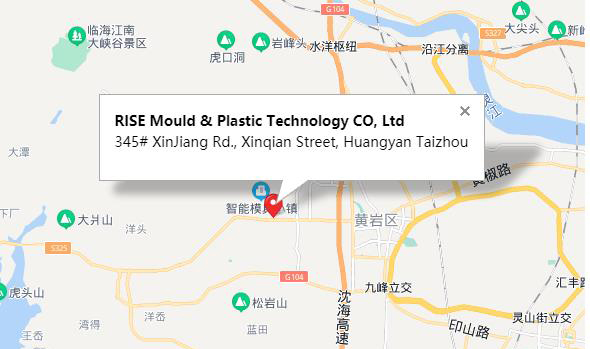
Rise Mould & Plastic Technology CO, Ltd 
345# XinJiang Rd., Xinqian Street, Huangyan Taizhou
export@risemould.com office@risemould.com |
|